





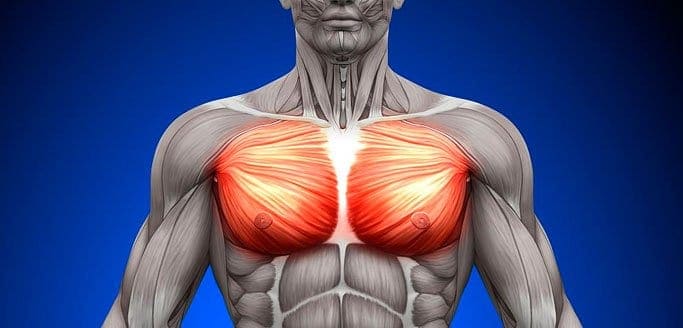
Building an elite chest is not about randomly pressing heavy weight and hoping your genetics do the rest. The biggest chests ever built resulted from obsessive precision: exercise selection, execution, volume management, recovery, and progression over years. When you look at Mr. Olympia champions, one thing becomes clear — they never trained their chests accidentally. They engineered every detail.
This article breaks down chest development the same way the greats approached it: biomechanics first, stimulus second, recovery always. If your goal is absolute maximum chest growth, this is the blueprint.
Absolute Max Chest Development Starts With Understanding Chest Anatomy
The pectoralis major has two primary functional regions that matter visually and mechanically: the clavicular (upper) fibers and the sternal (mid-to-lower) fibers. The biggest mistake lifters make is treating the chest as a single slab of muscle and relying solely on flat pressing. Mr. Olympia-level chests builders create them by prioritizing fiber direction, line of pull, and resistance curve.
Arnold Schwarzenegger famously obsessed over upper chest thickness because he understood something most didn’t at the time: a dominant upper chest makes the entire torso look larger, fuller, and more three-dimensional. Later champions like While many associate extreme bench numbers with chest growth, elite developers focused on control rather than spectacle. Bodybuilders like Frank Zane emphasized smooth bar paths, strict eccentrics, and constant tension. His bench pressing was never about maximal weight — it was about loading the chest through its strongest line of pull with zero wasted movement.

The lifter tracks the elbows naturally and lowers the bar under control to maximize stretch, and the press was driven by the pecs rather than momentum. This style of pressing produces far greater hypertrophy than simply moving weight from point A to point B.
For maximal hypertrophy, moderate-to-heavy loads in the 5–8 rep range work best when paired with strict form and full depth. Touch-and-go bouncing off the chest does nothing for growth.
Upper Chest Training for Absolute Max Chest Development
Every great chest has dominant upper pecs. Incline barbell and dumbbell presses are non-negotiable.
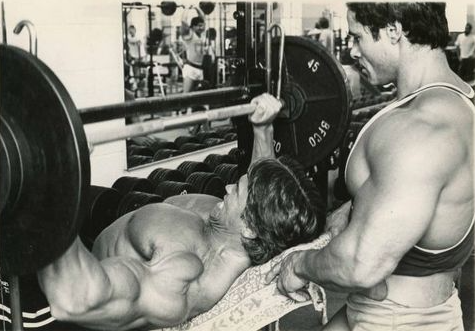
Arnold Schwarzenegger favored a relatively low incline angle, roughly 20–30 degrees. This kept tension on the clavicular fibers without shifting the load to the front delts. Dumbbells were often preferred because of the deeper stretch and ability to adduct the arms harder at the top.
For pure hypertrophy, incline presses shine in the 6–10 rep range, where load is heavy enough to recruit high-threshold motor units but light enough to maintain joint integrity and constant tension.
Dumbbell Presses for Absolute Max Chest Development
Dumbbell presses are not a secondary exercise — they are a primary growth driver. The extended range of motion at the bottom places the pecs under deep stretch, a stimulus repeatedly shown to drive hypertrophy.
Chris Bumstead consistently uses dumbbell presses early in his chest sessions. His focus is not maximal weight but maximal control. The dumbbells descend until the chest is fully stretched, then come together slightly at the top to emphasize horizontal adduction.

This is where most lifters leave growth on the table by locking out hard and relaxing the pecs. The contraction must be intentional.
Lower Chest Training and Weighted Dips for Maximum Chest Growth
Dips are one of the most underused mass builders for the chest. When performed with a forward torso lean and flared elbows, dips heavily load the lower and outer pec fibers.
Dorian Yates used heavy dips as a staple movement, often loading them aggressively once bodyweight became insufficient. The key was depth — descending until the chest was fully stretched without shoulder discomfort.

Dips thrive in moderate rep ranges, typically 8–12 reps, where continuous tension and metabolic stress combine for growth.
Isolation Work — Where Elite Chests Are Finished
Compound lifts build mass, but isolation work carves detail, fullness, and density.
Fly Variations — Stretch and Squeeze
Cable flyes, pec deck flyes, and dumbbell flyes all serve a purpose when executed properly. The chest’s primary function is horizontal adduction, and flyes load that movement directly.
Jay Cutler became known for high-volume flye work, especially cables, because they maintain tension throughout the entire range of motion. The goal was not weight but stretch under control and a hard, sustained contraction.

Rep ranges of 12–20 excel here, especially when the eccentric is slowed and the peak contraction is held briefly.
Machine Presses — Safe Overload
Modern bodybuilding has embraced machines for one reason: they allow precise loading with strict execution. Kevin Levrone and Chris Bumstead both heavily utilize plate-loaded and selectorized presses because they eliminate momentum and force the pecs to do the work. Machines allow relentless tension, controlled eccentrics, and safe proximity to failure — the exact conditions required for hypertrophy.

Training Volume and Sets for Absolute Max Chest Development
Maximum chest growth does not come from annihilating the muscle once per week and hoping your body recovers. Most elite physiques train chest with moderate-to-high volume split across the week.
A proven structure is 12–20 hard working sets per week, divided over one or two sessions depending on recovery capacity. Each session typically includes one heavy press, one incline movement, one secondary press or dip, and one to two isolation exercises.
Every set that counts is taken within one to two reps of failure. Junk volume is avoided.
Recovery Strategies for Absolute Max Chest Development
Chest training destroys muscle fibers, but recovery builds them. Mr. Olympia competitors prioritize sleep, nutrition, and strategic deloads as seriously as training itself.
The chest responds extremely well to food. Adequate calories, high protein intake, and sufficient carbohydrates dramatically improve recovery and performance. Chronic soreness, loss of pressing strength, or joint pain are signs volume exceeds recovery.
Frank Zane repeatedly emphasized that training was only one piece of the equation — recovery was where physiques were built. He prioritized sleep, stress management, and nutrition with the same discipline he applied to form and execution. Chest growth is no exception.

Progressive Overload Without Ego
The biggest chests in history grew because lifters added load, reps, or control over time — not by chasing numbers at the expense of form. Progression can be as simple as adding one rep per set, slowing the eccentric, or improving contraction quality.
Arnold meticulously tracked performance and focused on quality progression. This didn’t always mean more weight — it often meant cleaner reps, deeper stretches, or stronger contractions. That attention to detail is what separates chest growth from chest training. That mindset, sustained for years, is what creates elite development.

Final Word
Absolute max chest development is not mysterious. It is the result of intelligent exercise selection, perfect execution, sufficient volume, ruthless consistency, and disciplined recovery. Every Mr. Olympia champion with an iconic chest followed these principles, whether they articulated them or not.
Train the chest as a precision instrument, not a punching bag. Do that long enough, and growth becomes inevitable.

Mario Latinski is a passionate bodybuilder and fitness enthusiast dedicated to sharing science-based insights on training, nutrition, and muscle growth. With years of experience in the gym, he combines personal experience with research-backed strategies to help others build strength, improve performance, and achieve their physique goals. Outside the gym, Mario enjoys experimenting with meal planning, supplements, and fitness science to optimize results and inspire others.