







Hypertrophy nervous system limitations are the reason muscle growth stalls for most lifters long before their genetic potential is reached, making the hypertrophy nervous system relationship the most overlooked factor in long-term muscle development. When the nervous system can’t recover fast enough, hypertrophy slows, plateaus, or stops entirely—even when training volume and intensity continue to rise.
Muscle growth doesn’t stall because you’re not training hard enough. It stalls because your nervous system reaches a limit your muscles haven’t.
Most lifters believe hypertrophy is purely mechanical. Lift more weight, add more sets, push closer to failure. That strategy works early on. But after months or years of progressive overload, gains slow down, joints start complaining, motivation fades, and recovery quietly deteriorates.
Understanding the hypertrophy nervous system relationship is the difference between short‑term size and muscle that keeps building year after year.
Muscle Is Built by the Nervous System First
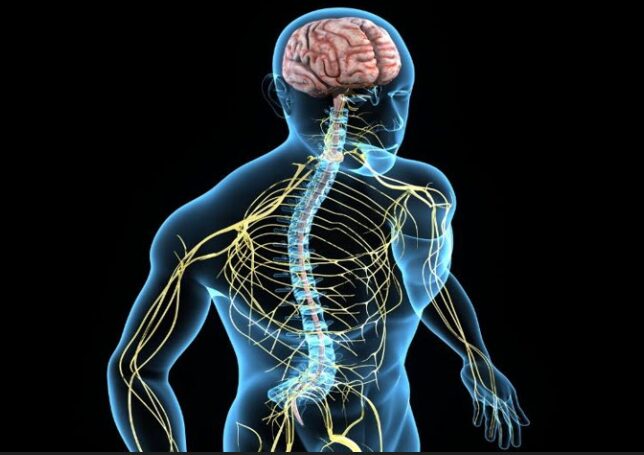
Every rep starts in the brain.
Before a muscle fiber contracts, a signal must travel from the central nervous system through motor neurons and into the muscle tissue. The quality of that signal determines how much force is produced and how much tension the muscle actually experiences.
Early hypertrophy is largely neural. Strength increases rapidly because the nervous system becomes more efficient at recruiting high‑threshold motor units, synchronizing muscle fibers, and increasing firing rates. As training age increases, neural demands rise faster than muscle tissue adapts.
At that point, the nervous system becomes the bottleneck—not the muscle.
Why Hypertrophy Plateaus Even When Volume Increases
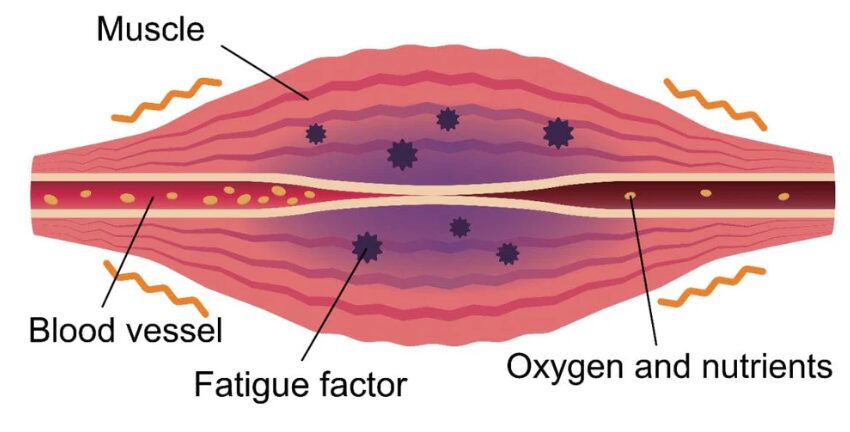
When progress slows, most lifters respond by doing more. More sets, more exercises, more intensity techniques, and more training days. This increases peripheral fatigue, which shows up as soreness and pumps, but it also massively increases central fatigue, which is far harder to detect.
Central fatigue shows up subtly. Bar speed slows even when the weight feels manageable. Explosive strength fades. The mind‑muscle connection weakens. Motivation drops and performance becomes inconsistent from session to session.
When the nervous system is chronically stressed, muscle protein synthesis becomes less responsive to training. Muscle is still being damaged, but the signal telling it to rebuild is weaker.
Hypertrophy doesn’t stop because the muscle can’t grow. It stops because the growth signal is degraded.

The Stimulus‑to‑Fatigue Ratio Most Programs Ignore
Every exercise has a cost.
The goal of hypertrophy training is not to maximize stimulus, but to maximize stimulus relative to fatigue. Heavy compound lifts, high volume, and frequent training to failure create strong growth signals, but they also place a disproportionate load on the nervous system.
Over time, that balance flips. You’re doing more work to achieve less adaptation. Strength stagnates despite adequate food intake. Pumps feel flat or inconsistent. Warm‑ups get longer just to feel ready, and deloads stop feeling optional and start feeling mandatory.
This is where most lifters blame genetics, age, or hormones, when the real issue is neural recovery debt driven by poor hypertrophy nervous system management.
Why Advanced Lifters Need Less, Not More
Beginners grow despite poor programming. Advanced lifters grow only when programming becomes precise.
As neural efficiency increases, the nervous system becomes more sensitive to overload. Progress often improves when hard sets are reduced, exercises are chosen more intelligently, recovery windows are extended, and intensity is rotated instead of endlessly adding volume.
This is why elite physiques are often built on moderate volume, high intent, and impeccable execution rather than marathon workouts. The nervous system responds best to high‑quality tension, not constant exhaustion.

Central Fatigue vs Peripheral Fatigue
Peripheral fatigue is local and obvious. It shows up as soreness, burning sensations, and muscle pumps. Central fatigue is systemic and subtle.
Peripheral fatigue usually resolves within hours or days. Central fatigue can linger for weeks. The problem is that you can still train while centrally fatigued. Workouts feel acceptable, but progress quietly stalls. Over time, chronic central fatigue suppresses anabolic signaling and increases injury risk.
True hypertrophy requires both muscle damage and neural freshness.

Training for Hypertrophy Without Frying the Nervous System
Muscle grows best when the nervous system is challenged, not overwhelmed.
Long‑term hypertrophy training prioritizes mechanical tension over metabolic exhaustion. Proximity to failure is used strategically instead of chased on every set. Intensity is rotated rather than pushed linearly forever, and recovery phases are built in before plateaus appear.
This is why hybrid and longevity‑focused training models consistently outperform traditional high‑volume approaches over time. They respect the neural cost of growth and keep the hypertrophy nervous system balance intact.

The Real Reason Some Lifters Keep Growing for Decades
You’ve seen them. They aren’t always the strongest in the gym, and they don’t train the longest sessions. Yet year after year, their physiques look denser, thicker, and harder to replicate.
They train in a way that keeps their nervous system adaptable.
Hypertrophy doesn’t end with age. It ends when neural recovery is ignored for too long.

Final Thoughts
If your training feels harder but your physique isn’t improving, the answer isn’t more effort. It’s smarter stress.
Muscle is easy to stimulate. The nervous system is not.
When neural recovery becomes the priority, hypertrophy starts moving again. Growth isn’t about doing more—it’s about doing what the nervous system can actually recover from.

Mario Latinski is a passionate bodybuilder and fitness enthusiast dedicated to sharing science-based insights on training, nutrition, and muscle growth. With years of experience in the gym, he combines personal experience with research-backed strategies to help others build strength, improve performance, and achieve their physique goals. Outside the gym, Mario enjoys experimenting with meal planning, supplements, and fitness science to optimize results and inspire others.